
APPLICATION REVIEW
Engineering Plastic Applications
Select a material from the service conditions, part geometry, production route and evidence your project requires. Polynectra reviews these details before confirming a grade or quotation.
BEFORE MATERIAL SELECTION
Start with the operating conditions
A material family name does not define the final specification. Reinforcement, additives, color, processing history and part geometry can change performance.
Send the operating temperature, chemicals, load, dimensions, tolerance, quantity and required documents. A drawing or current specification makes the review more useful.
Temperature, chemicals, pressure, wear, electrical duty and cleaning cycle.
Product form, dimensions, tolerance, surface needs and mating features.
Prototype quantity, batch volume, annual demand and target delivery country.
COA, inspection report and third-party test needs for the selected grade.
INDUSTRY REQUIREMENTS
Application factors to define in the RFQ
These examples describe review factors. They do not assign a grade or certify a material for a regulated use.
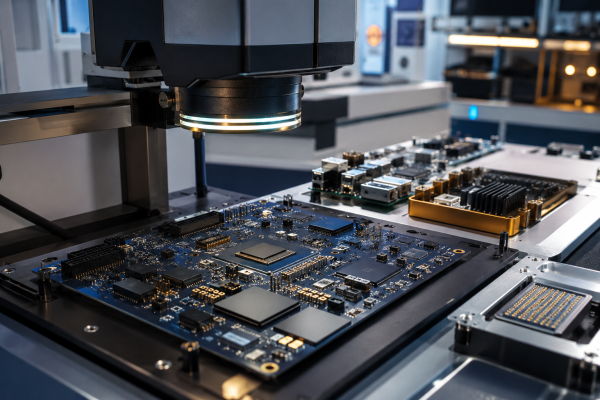
ELECTRICAL AND ELECTRONICS
Insulators, connectors, fixtures and test components
Define the operating temperature, voltage environment, dimensional stability, chemical contact and any flame or electrical test evidence.

OIL, GAS AND CHEMICAL
Pump, valve, seal and fluid-system components
Identify every process medium, concentration, temperature, pressure, wear mode and sealing interface. Safety-critical use requires project-specific validation.

INSTRUMENTS AND MEASUREMENT
Housings, fixtures and precision internal parts
Share the tolerance stack, temperature range, cleanliness needs, thread details, surface requirements and dimensional inspection plan.

MEDICAL AND LABORATORY EQUIPMENT
Equipment parts, fluid paths and laboratory fixtures
State the cleaning or sterilization cycle and all contact conditions. Biocompatibility, food-contact or medical evidence must match the exact grade and lot.

INDUSTRIAL AUTOMATION
Wear parts, guides, fixtures and handling components
Define the load, motion, cycle count, friction pair, lubrication, debris exposure and dimensional interfaces that control material and machining choices.

ROBOTICS AND AUTONOMOUS SYSTEMS
Lightweight structures, wear parts and electrical supports
Provide the target mass, stiffness, impact duty, wear interface, temperature, electrical requirement and assembly method for each component.
MATERIAL SHORTLIST
Use material families as a starting point
The final grade depends on the project. Confirm all performance and compliance requirements against current supplier documents.
| Material family | Common review reasons | What to confirm | Available route |
|---|---|---|---|
| PEEK | Temperature, chemicals, mechanical load and wear | Grade, reinforcement, service conditions and required evidence | Pellets, stock shapes, filament and machined parts |
| PEI | Dimensional stability, electrical duty and heat exposure | Grade, color, process route and application documents | Pellets and project-specific stock or feedstock review |
| PPS | Chemical exposure, electrical components and precision machining | Grade, filler, dimensions, tolerance and inspection scope | Rods, sheets, pellets and machined parts |
| PPSU / PSU | Toughness, hydrolysis exposure and repeated cleaning cycles | Exact cycle, contact conditions and grade-specific evidence | Stock shapes and project review |
| PI / PAI | Heat, wear, insulation and precision component requirements | Stock grade, geometry, machining tolerance and inspection plan | Sheets, rods and machined component review |
PROJECT REVIEW
Send enough detail for a useful answer
Attach a drawing when available. Polynectra can then review the material form, production route and information needed for quotation.
- Material or current grade
- Part drawing and dimensions
- Operating conditions
- Prototype and batch quantity
- Required tolerance and inspection
- Destination and required documents
Email: sales@polynectra.com WhatsApp: +86 132 7297 6542