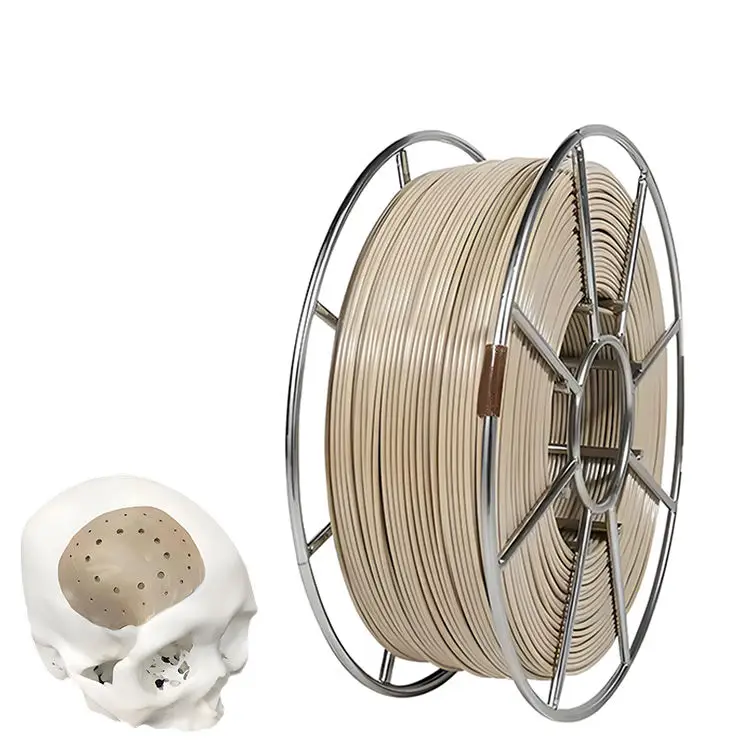
Carbon-fiber-reinforced PEEK granules combine a PEEK resin matrix with a carbon-fiber reinforcement system. Engineers consider this material when they need a reinforced PEEK route for stiffness, dimensional control or wear-related design targets. Fiber loading, fiber length, surface treatment and PEEK grade change flow and finished-part behavior. This page therefore describes the material family. It does not assign a generic fiber percentage or a universal property value.
What carbon fiber changes in PEEK
Carbon fiber can raise stiffness and reduce thermal expansion compared with an unfilled PEEK grade. The change is directional. Flow during molding or extrusion can orient the fibers, so strength and shrinkage can differ along and across the flow path. The reinforcement also changes machining response, weld-line behavior and surface appearance. Use the proposed grade data sheet and a representative trial for design decisions.
Material and process options
- Injection molding for repeatable complex parts when the grade and tool support the route
- Extrusion or compounding for profiles, feedstock development or stock-shape programs
- Color and additive systems selected with the target application
- Lot-specific drying, storage and handling controls recorded before processing
Victrex and Solvay publish different PEEK families and grades. A trade name or the phrase “CF PEEK” is not enough to define an equivalent material. Polynectra confirms the manufacturer, grade, fiber loading and document set in the quotation.
Applications to evaluate
Common discussions include wear parts, brackets, fixtures, pump or valve components, electrical hardware and lightweight structural elements. A carbon-fiber PEEK part may suit a design that needs stiffness with polymer corrosion resistance. It may not suit a part where electrical insulation, impact behavior, color or fiber orientation creates a different priority. Review the full load case and chemical environment.
Design and molding checklist
- Define the load direction and the surfaces that need wear or dimensional control.
- Mark weld lines, inserts, threads and thin sections on the drawing.
- State the target fiber loading instead of assuming “CF30” or another label.
- Confirm drying, melt preparation, mold temperature and cooling controls from the selected data sheet.
- Specify dimensional inspection and any mechanical, thermal or chemical test needed for the lot.
Why a project trial matters
Fiber orientation can affect shrinkage and anisotropy. A short molding or extrusion trial helps compare the proposed grade with the actual geometry. It also gives the inspection team a reference for appearance, dimensions and warpage. Ask for a trial plan when the part carries load or has a tight tolerance.
Request a grade-matched quotation
Send your drawing, process, fiber target, quantity and operating conditions through Contact Polynectra. We will review the material route and confirm the current datasheet, COA and packaging scope.
Reviews
There are no reviews yet.